

What could I “blog” about? I thought about drugs, pharmacology being like a calling for me for decades; and I am sure many blogs in the future will tackle drugs, new and old, good and bad, interactions and side-effects, promising and novel…I was sure I would address COVID-19, the potential pathophysiological role of inflammation and the bradykinin/kallikrein pathway as targets of treatment; but I feel like we are in a state of information overload about the pandemic!
How about enticing my fellow readers in a story about drugs and consciousness, psychedelics, psychomimetics and how a diversity of pharmacological systems and receptors teaches us about what is consciousness.
I have always been interested in the effects of drugs on brain function, not only neurological effects we can comprehend well, but also these integrated, higher functions that make us aware of our environment, that allow us as humans to differentiate good from bad, appropriate from inappropriate; certainly I will discuss drugs that alter behaviors and our awareness of the environment in many subsequent posts. No, finally, after giving it lots of thoughts, I decided to take you on a short introductory journey of why I came to love pharmacology and pathology so much, how trying to understand the “why’s” of what we see has taken a central place in my entire life.
It all started with plants and flowers!
It was all seeded early on by Materia Medica, by Pharmacognosy. The use of drugs as remedies can be traced back to the dawn of humanity with historical landmarks scattered across millennia of ancient culture. Primarily empirical, the use of plants for medicine led to a scientific period where chemistry and the isolation of active principles gave birth arguably to a “chemotherapy” in the XIXth century, quickly followed by direct chemical synthesis thanks to organic chemistry. Yet close to half of prescribed medication have in their history natural precursors, plant active principles as a starting point…and this includes quinine from the bark of Cinchona species and semi-synthetic derivatives like hydroxychloroquine, Digitalis and digoxin, Papaver somniferum and morphine (and many semi-synthetic opiates, including hydrocodone, oxycodone), Colchicum and colchicine, Belladona and atropine, scopolamine, and countless others.
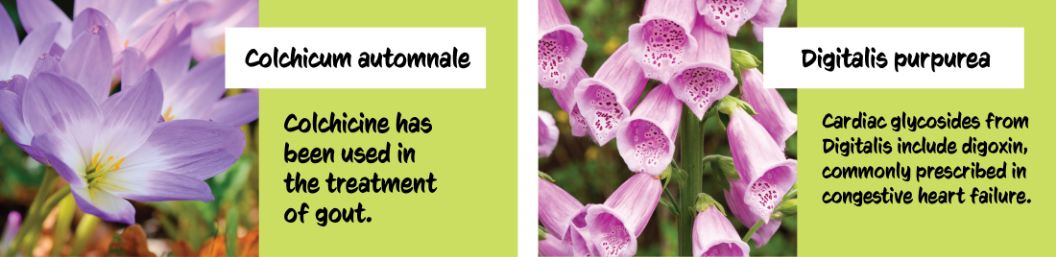
One could argue that in some respect, the story of medical cannabis is in part a return to the past and the use of raw plant material and extracts to treat ailments; as if a couple centuries of attempts to tame nature and create drugs with known active ingredients, stocks of pills with established dosage and thereby reproducible therapeutic efficacy, were erased in a nostalgia of our past relationship with Materia Medica…My first medical Journal subscription in the mid-80’s was to The Journal of Ethnopharmacology…
Two major groups of natural active principles are isolated readily from plants: glycosides, alkaloids. Essential oils, primarily terpenes and derivatives of phenylpropane have relevance in cosmetic and food industries.
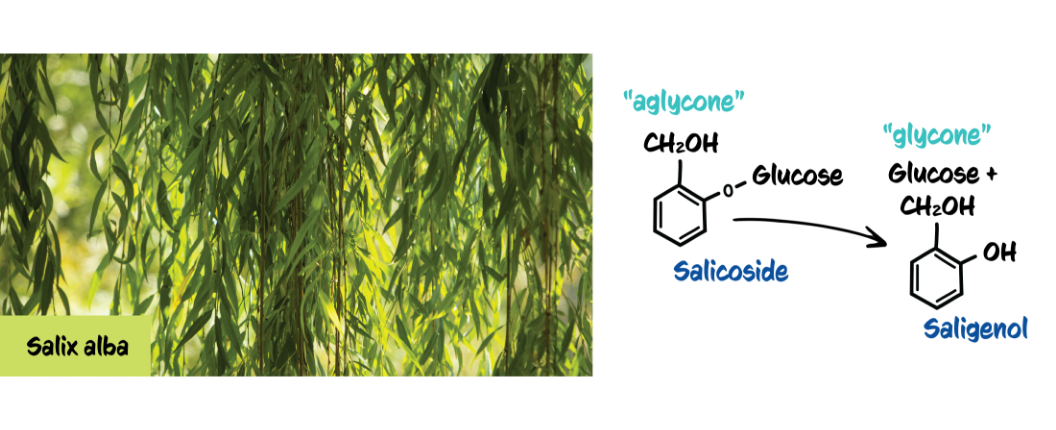
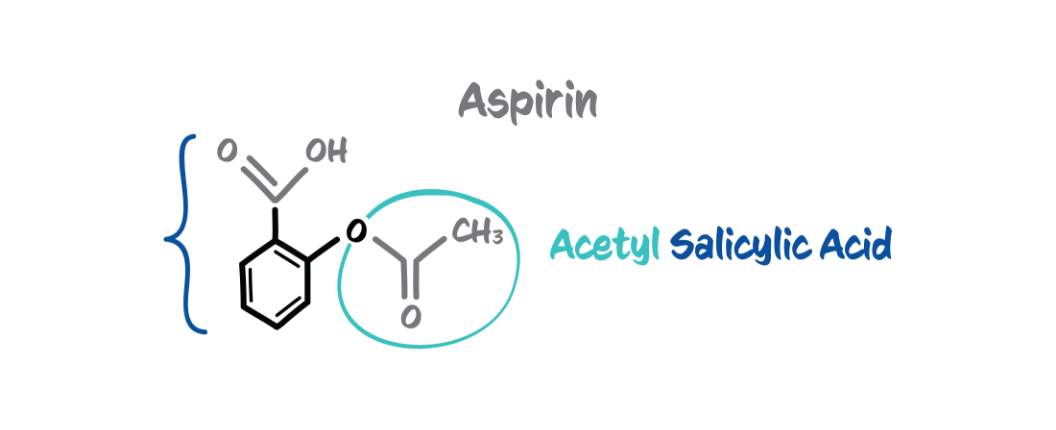
Glycosides are molecules that condense a sugar moiety, the “oside” portion or “glycone”, with a non-sugar-related portion, the “aglycone”. The aglycone gives the Pharmacology of the compound. An interesting example are the saponins. You can recognize in “sapo”, soap, saponification…saponins effectively froth when shaken in water! Ethnobotanists know when plants contain these important chemicals: local use of parts and extracts to fish is common in many social groups around the planet since saponins are highly toxic. If historically the root of Saponaria was used as a soap, saponins have several medical properties used today in medicine. Have you heard of the weeping willow story? A tree thriving in cold and wet environments, in swampy area…must be a plant that treats rheumatisms! The genus is Salix, the family, Salicaceae and Salix alba gave us salicoside which breaks down to glucose and saligenol (salicylic alcohol), which served as a starting point for the synthesis of aspirin. Benzopyrone derivatives from plants gave us coumarins, to date, a major ambulatory anticoagulant approach with hydroxycoumarins like warfarin. It all started from tonka beans collected from “kumaru” trees, Coumarouna odorata, a Fabaceae (pea-family). If the genus reminds you the coumarin story…the species, odorata, refers to the vanilla scent of coumarins, which gave the tonka bean a use in culinary and cosmetic industries! Many other chemical classes of glycosides have therapeutic uses such as anthraquinone glycosides which gave us laxatives and the famous melanosis coli to patients who abuse them (think “anthrax”, dark, black). I would not forget the cardiac glycosides which live today as digoxin, a first-line drug in the management of heart failure. Yet, one of the oldest uses of saponin-containing plants has been to fish…
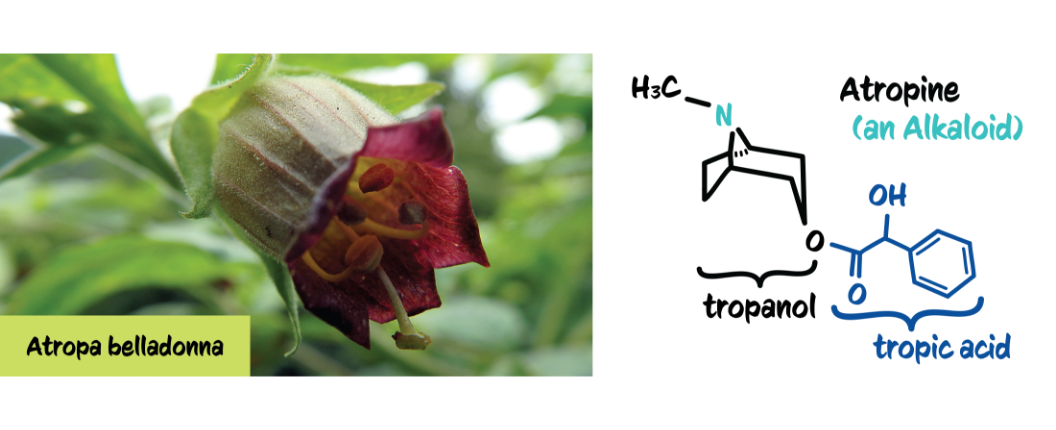
Alkaloids are nitrogenous compounds, thereby with alkaline properties from the nitrogen moiety. With glycosides, alkaloids constitute most of the active principles from plants used in medicine. Alkaloids tend to have marked physiological or toxicological effects at extremely low dosage. They all end in “ine”! Commonly combined to organic acids, they rarely exist alone in a plant. Rather a family of related compounds exist in parts as varied as the roots, leaves, fruits, or bark. The role of alkaloids in the plant is not known, yet they have considerable therapeutic effects. Many have toxicities or uses related to our nervous system. Examples include the sympathomimetic ephedrine, sympatholytic ergotamine, parasympathomimetic pilocarpine or arecoline, parasympatholytic atropine or scopolamine; there are CNS depressants or stimulants, anesthetics…think about compounds like cocaine, nicotine, caffeine, theophylline, morphine, codeine, all are alkaloids from plants!
So, you now have it, a little bit of my history and how an interest in medicinal plants made me love medicine and the treatments of human diseases. Isn’t it amazing to think and realize that we have so many receptors or systems which respond specifically to these natural compounds?
It is as if in the genetics of the plants our own genetic destiny has already been imprinted. Plants continue to offer us new ways of modifying our human biochemistry and physiology. Medicine rests on the natural symbiosis of plants and humans to treat symptoms of, and in some cases, cure diseases.